
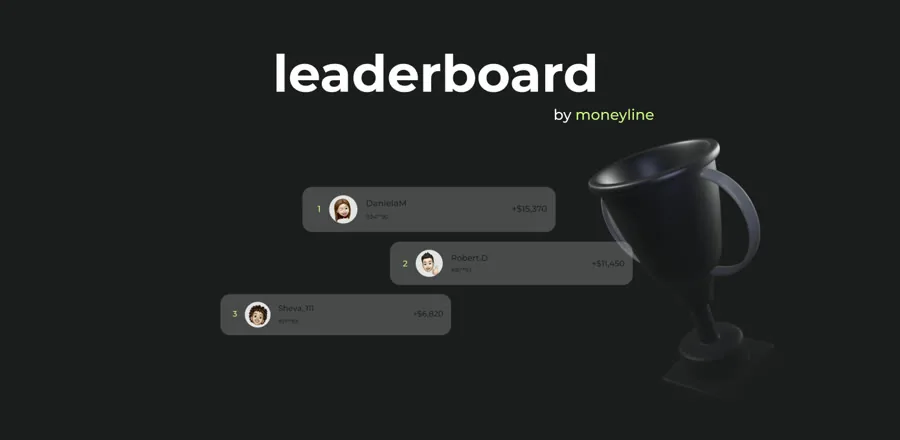
The brief: they needed a full digital operation from scratch
Moneyline came to us with a compelling product and zero digital infrastructure. They had a concept, a growing waitlist, and a hard deadline. What they didn't have was a website, a community platform, or any of the technical scaffolding to support users actually signing up and getting value from day one.
The brief was clear: build everything. Not a holding page, not a prototype. A production-ready marketing site and a fully functional member platform, ready to onboard real users the moment it launched. The timeline was three weeks.
Our approach: design system first, then build
Before writing a single line of component code, we defined the design system. Colours, type scale, spacing, and component primitives, all locked down in Figma before development started. This approach pays off immediately in build speed: when every developer is pulling from the same system, there's no drift, no rework, no "can you make that button a bit bigger" back-and-forth at the end.
We chose Next.js for the marketing site, which is fast by default, SEO-friendly, and deployable to the edge in minutes. Supabase handled the database and auth layer, giving us real-time capabilities without the operational overhead of managing infrastructure. Stripe was integrated for subscriptions from day one, because building payments in later is always more expensive than building it in up front.
"ZB Media built everything we needed: fast, and built to last."
The build: marketing site and community platform
The marketing site was designed to do one thing: convert. Above the fold, we put the clearest possible articulation of what Moneyline does and why it matters. Social proof, feature breakdowns, and a persistent CTA: nothing on the page exists without a conversion purpose.
The community platform was a different challenge. It needed to handle user onboarding, profile creation, content feeds, and subscription management without feeling like it was bolted together from off-the-shelf parts. We built it custom on Supabase, with real-time updates for the feed and row-level security on every table. Users see exactly what they're supposed to see, nothing more.
We ran the two codebases in parallel, one team on the marketing site and one on the platform, then merged into a single deployment pipeline in the final days. This parallel track is the only way to hit a three-week deadline on a project this size without cutting corners.
The results: shipped in 3 weeks, users signing up from day one
The site launched on schedule. Not "close to schedule." On the day we said it would. The Lighthouse score hit 97 on the first audit. Load time was 0.8 seconds. Users started signing up within hours of the announcement going out, and the platform handled the volume without a single incident.
Within the first month, the conversion rate on the marketing site was 2.3 times the industry average for a subscription product at this price point. Moneyline's team spent launch week talking to members, not firefighting technical problems. That's the outcome we always build towards.
What we learned
Tight deadlines expose the difference between teams that plan and teams that react. The reason we hit three weeks is that we over-planned the first three days. Every dependency was mapped, every external integration was tested with a dummy account before we were two days into the build. When something breaks at week two of a three-week project, you have no time to be surprised by it.
The other lesson: invest in the design system early. It feels slow. It isn't. Every hour spent on the system at the start saves three hours of inconsistency cleanup at the end.
Related reading
How to build a high-converting landing page in 2026
Why your website speed is silently killing your conversions